
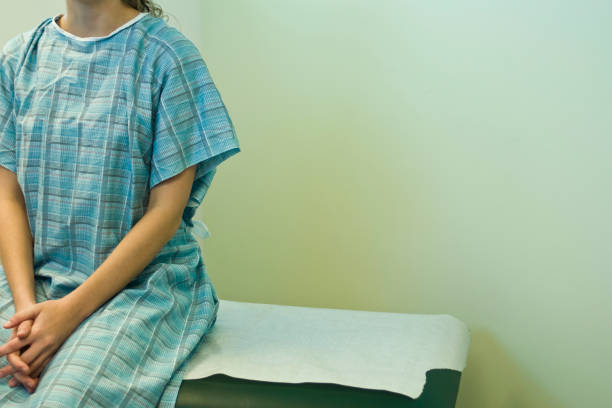
If you have ever left the doctor’s office with more questions than answers, felt dismissed or belittled by a medical professional, or have struggled to receive a diagnosis for chronic symptoms, then you are likely a woman who faces gender bias in the medical field. If any of these experiences sound familiar, it is important to understand that this type of treatment is far from uncommon. At SDA, a Junior who wishes to remain anonymous expresses that her former psychiatrist “labeled symptoms of Premenstrual Dysphoric Disorder as normal,” postponing a diagnosis of the chronic premenstrual condition until she switched psychiatrists over a year later. Similarly, an anonymous sophomore shares that her doctor labeled extreme pelvic pain as “normal period cramps.” Feeling dismissed in a medical setting is the norm for many girls and women beyond SDA. In fact, a study conducted by Duke Health found that one in five American women feels that at some point in their lives, a health care provider has ignored their symptoms. So why is it that doctors struggle to counsel and diagnose female patients? Rather than a personal vendetta, a doctor’s inability to provide equal care to women is more closely tied to deep, institutionalized misogyny, fostered by centuries of discrimination against females in research and medicine.
Aristotle, the renowned Greek philosopher, believed the female body to be the inverse of the male and therefore defective. This foundational misconception set the framework for other ancient medical theories, including the “wandering womb,” which suggested that a woman’s uterus would move throughout her body and cause various symptoms of hysteria. The term hysteria refers to emotional instability often expressed through panic and irrationality. Historically, the term justified the exclusion of women from medical research as it fostered a perception that women’s symptoms were caused by emotional distress, rather than legitimate underlying conditions. Not until 1993 were women officially required to be included in clinical studies, and even today, male mice continue to be preferred for medical research over females, due to concerns that integrating female hormones will cause too much variability in data collection.
Even though women’s health may be complex, many women suffer at the expense of continuing patterns of exclusion in medicine, especially those navigating conditions such as Endometrosis, Premenstrual Dysphoric Disorder (PMDD), and Polycystic Ovary Syndrome (PCOS). While medical professionals often dismiss each of these hormonal disorders as symptoms of anxiety or low pain tolerance, Endometriosis in particular presents one of the clearest examples of sexism in medicine.
Endometriosis involves an overgrowth of tissue outside the uterus, inflicting chronic pelvic pain on women who suffer from the condition. According to the World Health Organization, roughly 1 in 10 women worldwide are affected by Endometriosis, yet despite its prevalence, patients wait an average of 4-12 years to be formally diagnosed after the first signs of symptoms. Delays in diagnosis can be attributed to the absence of foundational research surrounding the condition—for example, the U.S. The National Institutes of Health reports that funding for Endometriosis research this year only represents 0.067% of total annual research funds.
The lack of resources for those who suffer from Endometriosis and many other similar hormonally-driven conditions, has left many women living with untreated symptoms, leading to missed days of school, work, and time lost coping with the often debilitating pain that accompanies these conditions.
While the absence of medical support for women reflects a larger historical continuity of exclusion and dismissal, many organizations refuse to accept the institutionalization of sexism in medicine. In our own community, the Doris Howell Foundation for Women’s Health Research is a San Diego-based non-profit organization dedicated to closing the gender gap in medical research by funding studies on women’s health. The non-profit also offers in-person educational lectures to women in underrepresented communities in San Diego, with the goal of increasing personal agency surrounding health. Additionally, TrueCare Health Centers are located throughout San Diego County and provide counsel and resources for uninsured women living with chronic conditions.
Although it may seem impossible to navigate women’ s health, many organizations and practices challenge the long history of exclusion in the medical field, offering a glimpse into a future where women are not expected to live with pain.